


Pilot Grants
Encourage new Rutgers-wide collaborations and establish a platform to develop independent extramural grant applications.


A transformative initiative designed to position Rutgers as a national leader in computational medicine and health AI.
The Center for Biomedical Informatics and Health AI was established to serve as the catalyst for a transformative effort that establishes Rutgers as a national and international leader in computational medicine and health AI. The overarching goal is to bring together substantial existing, but currently siloed, strengths in the broad area of biomedical informatics, including bioinformatics, clinical informatics, clinical research informatics, public health informatics, translational bioinformatics, etc., and substantially expanding them, especially in the area of health AI, making them collectively much more than the sum of their parts.
Inaugural Director, Center for Biomedical Informatics and Health AI
Professor, Division of General Internal Medicine, Department of Medicine, RWJMS

Encourage new Rutgers-wide collaborations and establish a platform to develop independent extramural grant applications.

Provide funding and interdisciplinary mentorship in Biomedical Informatics and Health AI for postdoctoral researchers.
Provide a platform for undergraduate and MS Rutgers students to participate in hands-on projects focused on Biomedical Data Science and Health AI and introduce students to careers in Computational Medicine and AI in healthcare.

Augment Biomedical Data Science and Health AI training for Rutgers Health Postdocs and Graduate Students and introduce them to the value of using AI in Healthcare and Biomedical applications.

This series, co-sponsored by the Center for Data Science and BMIHAI, connects Rutgers faculty, staff, and students interested in AI training and research in health and medicine.
Date: August 1, 2025
Location: ICPH Building | 225 Warren Street, Newark, NJ

Advancing Rutgers Health AI through research, discovery, and collaboration.
The Rutgers Center for Biomedical Informatics & Health Artificial Intelligence (BMIHAI) is built on three big ideas:
We also bring in public-private partnerships (working with both government and companies) to help fund and guide our work.
The Rutgers Center for BMIHAI will be a place where:
By combining P4 Medicine, Learning Health Systems, and LivingLabs, we aim to transform both science and healthcare – starting in New Jersey, but with impacts that reach far beyond.
Our values are about fairness and opportunity. We want a system where:
At Rutgers, we’ll create 3–5 LivingLabs. LivingLabs are special programs that bring together people and technology to solve big health problems.
This idea has already worked in other places, like:
LivingLabs usually combine physical labs (where engineers build tools and devices) and virtual labs (data and simulations). They also rely on shared evaluation systems, funding partnerships, and teamwork across many fields.
Director, Center for Biomedical Informatics and Health Artificial Intelligence
Professor, Department of Medicine, Division of General Internal Medicine, Robert Wood Johnson Medical School
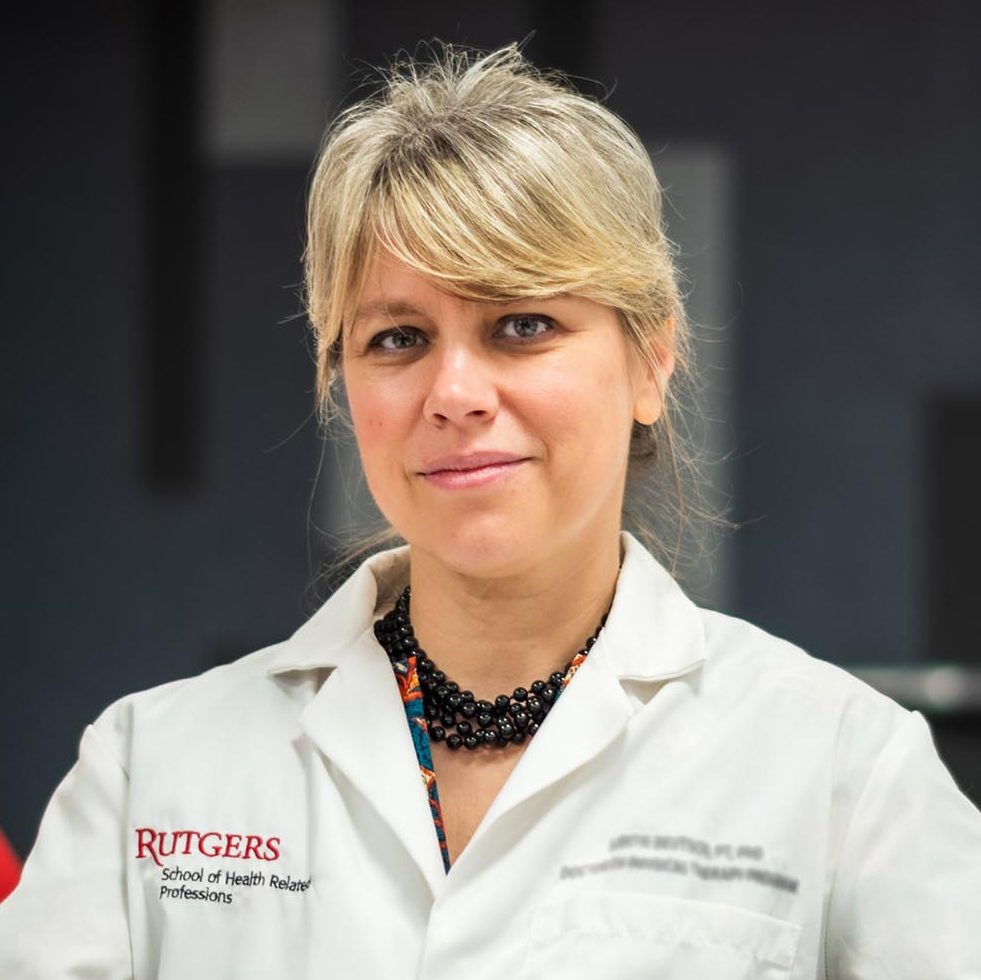
Deputy Director, Center for Biomedical Informatics and Health Artificial Intelligence
Associate Professor, Department of Health Informatics, Rutgers School of Health Professions

Professor of Medicine, Division of Infectious Diseases & Director, Center for Data Science, Rutgers New Jersey Medical School

Professor of Pathology, Laboratory Medicine and Radiology & Chief of Medical Informatics, Rutgers Robert Wood Johnson Medical School
Chief Informatics Officer & Director of Computational Imaging and Biomedical Informatics, Rutgers Cancer Institute
Inaugural Chief Research Informatics Officer, Rutgers Biomedical and Health Sciences
General questions about the center? Email: bmihai@ifh.rutgers.edu
Questions about the Summer Internship? Email: bmihai_internship@ifh.rutgers.edu
Questions about the Post-doc Program? Email: bmihai_postdoc@ifh.rutgers.edu
Questions about the Summer Bootcamp? Email: bmihai_bootcamp@ifh.rutgers.edu
Questions about the Annual Symposium? Email: bmihai_symposium@ifh.rutgers.edu
